This is another Advance Reading Edition that I received from Harper Collins Canada, and also a mystery, so I was extremely curious to see how Last Stop Sunnyside would compare to Dark Tort. I'm pleased (relieved?) to say that I liked this book very much. It wasn't an edge-of-your seat thriller, but it was an enjoyable read with believable characters whose actions made sense - the author made me care about these people and cheer them on.
Last Stop Sunnyside is the first in a planned series of novels about Dana Leoni, an intelligent young woman who has, due to some unhappy circumstances, ended up living in a rooming house in Parkdale, a down-and-out area in Toronto. Dana befriends many of her housemates, who are a colourful but good-hearted bunch of people, and together they are grieving the disappearance and subsequent death of their friend Maryanne. Maryanne was unemployed, and had a known drinking problem. Her death is ruled a suicide by the local police, but Dana and her friends can't let the matter rest and decide to find out what really happened to her.
There were a lot of things to like about this book. The descriptions of Toronto, particularly of the Parkdale neighbourhood, were vivid, and I especially enjoyed the "inside" view of homeless, mentally ill and other disenfranchised people. It's rare to read a novel that shows, with such sympathy and believability, what it's like to live on the "underbelly" of Canadian society. Apparently Capponi is drawing on her personal experience of living in Parkdale and in various mental health institutions - the bio on the back cover describes her as a "psychiatric survivor" and "one of Canada's leading mental health care advocates". Last Stop Sunnyside is certainly a creative and interesting way for Capponi to draw on her own experiences and give readers a glimpse into the life she's led, but it is never preachy. I don't get the sense that Capponi has an agenda - she's just telling a good story.
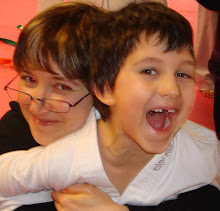
On a totally unrelated note, I hope that when this book is actually published they find a better author photo.
Thursday, March 16, 2006

Sunday, March 12, 2006
Dark Tort by Diane Mott Davidson
Dark Tort is the story of how Goldy Schulz, a caterer, tracks down the murderer of her young neighbor, Dusty Routt.
I don't know if I'm just feeling extra nit-picky because I'm sick right now, but all I can say is that this book was just plain BAD on so many levels. The writing, particularly the dialogue, was clunky (someone needs to remind Davidson that in novels, it's better to show, not tell), the characters had no depth and their behaviour often seemed foolish or just plain didn't make sense. The story was bogged down by excessive, unnecessary description of people's appearance, clothing, church activities, and home decor, and the author had an annoying habit of mentioning the make and model of car that the wealthier characters drove, while referring to other vehicles merely by body type. This seemed to be the type of book that would appeal to materialistic, narrow-minded, upper middle class, middle-aged suburban women. You can probably guess I don't fit into that category.
There was a huge amount of extraneous material in this book that did nothing to advance the story, though I admit it might be more meaningful to people who've read previous books in the series. I definitely felt that I was at a disadvantage reading this book before its prequels; the backstory and characters were introduced in a rather confusing way. I felt like I could never keep the characters straight, never mind their relationships to one another.
I haven't even mentioned how stuffed with implausible premises this novel is. For one thing, everyone in the story seemed to know one another or to be related. And in spite of being set in what sounded like an average sort of suburb of Denver, oddly, there were an awful lot of murders going on, or referred to in the recent past of Goldy and her family and friends. Gee, is suburban Denver the murder capital of the USA? Also, Goldy the caterer is married to the person in charge of the murder investigation, and yet he seems to always be hanging around, cooking fabulous meals (isn't that supposed to be Goldy's job?) and being sweet and supportive while she solves the crime that his investigation team is apparently totally unable to figure out (maybe because he's not at work!). Apparently, it's considered totally acceptable for this woman to "help out" with solving a serious crime. Yeah, right! Even I could see the holes in the descriptions of police procedures here. Somehow, in a police search of the home of a murder victim, vital pieces of evidence such as a personal computer were overlooked. And nobody noticed some stolen property that turns out to have been hidden in the law office where the body was found. Umm, sure.
I could go on and on, but gosh, I am having trouble coming up with ANYTHING positive to say about this book... and that's actually a problem, because the copy I have is an Advance Reading Edition from the publisher, and I'm supposed to be submitting a review for them to use to promote the book on their website. Time to call upon all of my BS writing abilities, I guess.
I don't know if I'm just feeling extra nit-picky because I'm sick right now, but all I can say is that this book was just plain BAD on so many levels. The writing, particularly the dialogue, was clunky (someone needs to remind Davidson that in novels, it's better to show, not tell), the characters had no depth and their behaviour often seemed foolish or just plain didn't make sense. The story was bogged down by excessive, unnecessary description of people's appearance, clothing, church activities, and home decor, and the author had an annoying habit of mentioning the make and model of car that the wealthier characters drove, while referring to other vehicles merely by body type. This seemed to be the type of book that would appeal to materialistic, narrow-minded, upper middle class, middle-aged suburban women. You can probably guess I don't fit into that category.
There was a huge amount of extraneous material in this book that did nothing to advance the story, though I admit it might be more meaningful to people who've read previous books in the series. I definitely felt that I was at a disadvantage reading this book before its prequels; the backstory and characters were introduced in a rather confusing way. I felt like I could never keep the characters straight, never mind their relationships to one another.
I haven't even mentioned how stuffed with implausible premises this novel is. For one thing, everyone in the story seemed to know one another or to be related. And in spite of being set in what sounded like an average sort of suburb of Denver, oddly, there were an awful lot of murders going on, or referred to in the recent past of Goldy and her family and friends. Gee, is suburban Denver the murder capital of the USA? Also, Goldy the caterer is married to the person in charge of the murder investigation, and yet he seems to always be hanging around, cooking fabulous meals (isn't that supposed to be Goldy's job?) and being sweet and supportive while she solves the crime that his investigation team is apparently totally unable to figure out (maybe because he's not at work!). Apparently, it's considered totally acceptable for this woman to "help out" with solving a serious crime. Yeah, right! Even I could see the holes in the descriptions of police procedures here. Somehow, in a police search of the home of a murder victim, vital pieces of evidence such as a personal computer were overlooked. And nobody noticed some stolen property that turns out to have been hidden in the law office where the body was found. Umm, sure.
I could go on and on, but gosh, I am having trouble coming up with ANYTHING positive to say about this book... and that's actually a problem, because the copy I have is an Advance Reading Edition from the publisher, and I'm supposed to be submitting a review for them to use to promote the book on their website. Time to call upon all of my BS writing abilities, I guess.
Tuesday, March 07, 2006
The Birth House by Ami McKay
This is a fine first novel, one that has been well publicized and recently made The Globe and Mail's bestseller list. The story is warm and inviting, a tale of a young woman groomed from an early age to be the apprentice and successor of the local midwife in a small coastal Nova Scotia town. McKay has a gift for narration and description - many of the passages are almost lyrical, particularly the prologue and opening paragraphs of Chapter One. The protagonist, Dora Rare, seems like someone I'd like to befriend - she is wise and loyal. Overall it was an enjoyable read that I was happy to pick up and immerse myself in, which is the most important quality in a nice piece of escapist fiction.
That said, I do have some quibbles about this book. I felt like none of the characters in the book (even Dora) were fully fleshed out. They didn't feel completely "real" to me and their motivation was not always clear - something that tends to bug me as I'm one of those people who is constantly asking why. Dora's "enemy"- an obstetrical doctor hell-bent on promoting "scientific" ways of birthing - felt extremely one-dimensional. The dialogue also felt a little stilted at times, and I occasionally found myself tripping over all the references to historical events and lore that were included in the book. I think that research can do a lot to add authenticity to a historical novel, but the history must always serve the story and occasionally it felt like The Birth House went a bit in the opposite direction, as entertaining as the results might have been.
On the whole I found myself thinking, at times, that the book came across as a bit of "wishful thinking" - the way the author wishes that things might have been, rather than the way they probably were. That's not always a bad thing in historical fiction - Marion Zimmer Bradley's divine Trojan War retelling, The Firebrand, comes to mind here - but to work, it needs to be a very strong story that sweeps you up and makes YOU wish that things had been that way, too. Ultimately, The Birth House didn't quite pull that off for me.
In spite of all that, I greatly look forward to meeting the author on Thursday evening, when she will be in Vancouver, and hearing her read from her work.
That said, I do have some quibbles about this book. I felt like none of the characters in the book (even Dora) were fully fleshed out. They didn't feel completely "real" to me and their motivation was not always clear - something that tends to bug me as I'm one of those people who is constantly asking why. Dora's "enemy"- an obstetrical doctor hell-bent on promoting "scientific" ways of birthing - felt extremely one-dimensional. The dialogue also felt a little stilted at times, and I occasionally found myself tripping over all the references to historical events and lore that were included in the book. I think that research can do a lot to add authenticity to a historical novel, but the history must always serve the story and occasionally it felt like The Birth House went a bit in the opposite direction, as entertaining as the results might have been.
On the whole I found myself thinking, at times, that the book came across as a bit of "wishful thinking" - the way the author wishes that things might have been, rather than the way they probably were. That's not always a bad thing in historical fiction - Marion Zimmer Bradley's divine Trojan War retelling, The Firebrand, comes to mind here - but to work, it needs to be a very strong story that sweeps you up and makes YOU wish that things had been that way, too. Ultimately, The Birth House didn't quite pull that off for me.
In spite of all that, I greatly look forward to meeting the author on Thursday evening, when she will be in Vancouver, and hearing her read from her work.
Monday, March 06, 2006
Of Wee Sweetie Mice and Men by Colin Bateman
I've been looking forward to returning to the crazy world of Dan Starkey, loveable loser journalist from Belfast, and this book did not disappoint me when it finally arrived on inter-library loan.
This time, Starkey, having failed to repair his marriage, finds himself accepting an offer to write a book about a boxer who has risen from obscurity to win a European title and is on his way to New York City to fight Mike Tyson. Along the way, our hero gets drunk an awful lot, is mugged twice, tries to save some whales, is saved by a whale, engages in an ill-conceived terrorist raid and eventually ends up with a heck of a story, much more than he had bargained for. The reality of life during the Terrors in Northern Ireland is still very much at the forefront in this book, even though most of it takes place in the United States; this time, Bateman manages to fit in some astute political commentary about Irish-Americans who donate copious amounts of money to Irish terrorist Groups.
What I found ironic, and rather stupid, really, is that while the story tries to both poke fun at and take a serious look at the bizarre, romanticized vision of Ireland that so many Americans have, and the various (mostly, in Starkey's opinion, misguided) reasons that they might donate money to a terrorist group "back home", the publisher chose to use little shamrocks as spacers in the story (you know, those symbols that are placed between paragraphs to show a change of scene or mood). Um, hello?
I will leave you with a few more choice quotes to give you a taste of the inimitable voice of Colin Bateman.
Once again I had foregone my chosen stance as the detached journalist; I wasn't even semidetached; I was a journalistic chalet bungalow, well built down below but with a lot of empty space up top.
"Fire! Fire!" I yelled.
"Everyone out! Everyone out!" shouted McLiam.
Someone tapped me on the shoulder. I turned. An elderly nun.
"Is this the way to the elevator?" she asked.
"Fuck away off!" yelled McLiam.
"Sister," he added.
(What is it with this guy and nuns? Must be an Irish thing.)
I'd love to include, for your reading pleasure, an extensive scene wherein Starkey tries to prove to a bigoted friend that it's not a good idea to refer to gay people as "poofs" while they are eating dinner in a restaurant in a town that is a haven for gay people... but it's far too long to type out, and so you'll have to read this book yourself. :-)
This time, Starkey, having failed to repair his marriage, finds himself accepting an offer to write a book about a boxer who has risen from obscurity to win a European title and is on his way to New York City to fight Mike Tyson. Along the way, our hero gets drunk an awful lot, is mugged twice, tries to save some whales, is saved by a whale, engages in an ill-conceived terrorist raid and eventually ends up with a heck of a story, much more than he had bargained for. The reality of life during the Terrors in Northern Ireland is still very much at the forefront in this book, even though most of it takes place in the United States; this time, Bateman manages to fit in some astute political commentary about Irish-Americans who donate copious amounts of money to Irish terrorist Groups.
What I found ironic, and rather stupid, really, is that while the story tries to both poke fun at and take a serious look at the bizarre, romanticized vision of Ireland that so many Americans have, and the various (mostly, in Starkey's opinion, misguided) reasons that they might donate money to a terrorist group "back home", the publisher chose to use little shamrocks as spacers in the story (you know, those symbols that are placed between paragraphs to show a change of scene or mood). Um, hello?
I will leave you with a few more choice quotes to give you a taste of the inimitable voice of Colin Bateman.
Once again I had foregone my chosen stance as the detached journalist; I wasn't even semidetached; I was a journalistic chalet bungalow, well built down below but with a lot of empty space up top.
"Fire! Fire!" I yelled.
"Everyone out! Everyone out!" shouted McLiam.
Someone tapped me on the shoulder. I turned. An elderly nun.
"Is this the way to the elevator?" she asked.
"Fuck away off!" yelled McLiam.
"Sister," he added.
(What is it with this guy and nuns? Must be an Irish thing.)
I'd love to include, for your reading pleasure, an extensive scene wherein Starkey tries to prove to a bigoted friend that it's not a good idea to refer to gay people as "poofs" while they are eating dinner in a restaurant in a town that is a haven for gay people... but it's far too long to type out, and so you'll have to read this book yourself. :-)
Friday, March 03, 2006
The Amber Spyglass by Philip Pullman
After raving about how wonderful the first two books in this trilogy were, I am feeling some trepidation about what I'm going to say now.
This book fell flat for me.
I don't know if Pullman was just stuck in telling this story after he finished The Subtle Knife. After all, as previously mentioned, he took three years to write the third book whereas the second book came out a year after the first and did a deft job of picking up the threads of the story and maintaining the wonderful pace. Maybe he honestly didn't know what should happen next.
This book did not pick up the pace at all, really. It was sort of cerebral, and wandering, and had many added elements (characters and subplots) that I thought could have been cut out or changed slightly to make for a cleaner story that would have kept the pace of the first two novels.
It's not that I didn't like this book - I did. I liked finding out what happened to the characters, and seeing the story tied up. I liked learning more about the world(s) of this series and thinking about the theological aspects of the story. But it just didn't grab me, and I regret that. Because of that, I found that critical reader in my head questioning things that happened in the story. I don't want to ask those questions here, because I don't want to give anything away. But they are running through my mind pretty insistently and the story was much weakened for me as a result.
This book fell flat for me.
I don't know if Pullman was just stuck in telling this story after he finished The Subtle Knife. After all, as previously mentioned, he took three years to write the third book whereas the second book came out a year after the first and did a deft job of picking up the threads of the story and maintaining the wonderful pace. Maybe he honestly didn't know what should happen next.
This book did not pick up the pace at all, really. It was sort of cerebral, and wandering, and had many added elements (characters and subplots) that I thought could have been cut out or changed slightly to make for a cleaner story that would have kept the pace of the first two novels.
It's not that I didn't like this book - I did. I liked finding out what happened to the characters, and seeing the story tied up. I liked learning more about the world(s) of this series and thinking about the theological aspects of the story. But it just didn't grab me, and I regret that. Because of that, I found that critical reader in my head questioning things that happened in the story. I don't want to ask those questions here, because I don't want to give anything away. But they are running through my mind pretty insistently and the story was much weakened for me as a result.
Subscribe to:
Posts (Atom)